



-
A codes library can be imported from an external file in different formats.
-
Click Job.
-
Click Points/Measurements/Codes.
-
Open the Codes tab.
-
Click Tools and select Load library. Select the format to import.
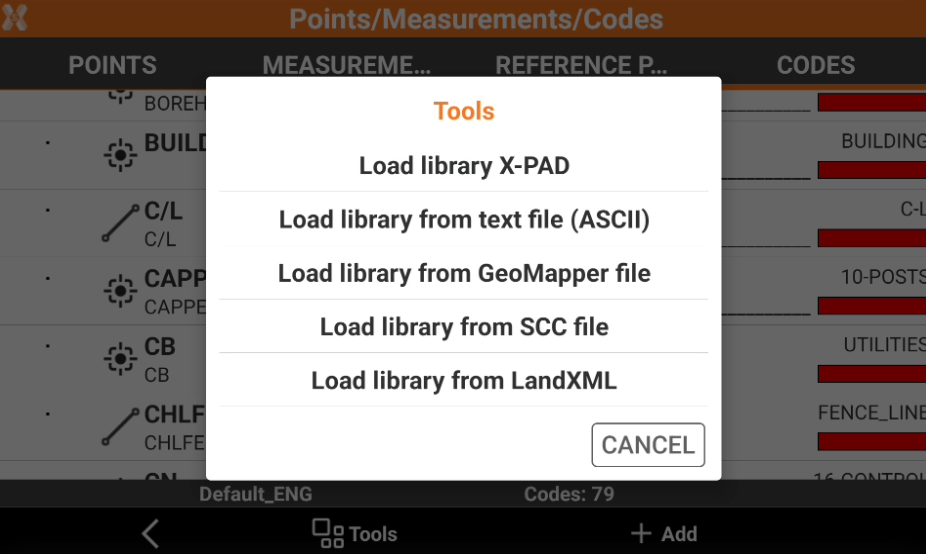
Import a code list from X-PAD file
-
This option allows to import a code library in X-PAD format (xml).
-
Select Load library X-PAD.
-
Select the X-PAD library from the list of available codes library in X-PAD/_Data/Codes folder.
It is possible to manage the code library and export in X-PAD format using Office Fusion.
Import a code list from ASCII file
-
This option allows to import a code library from an ASCII text file.
-
Select Load library from text file (ASCII).
-
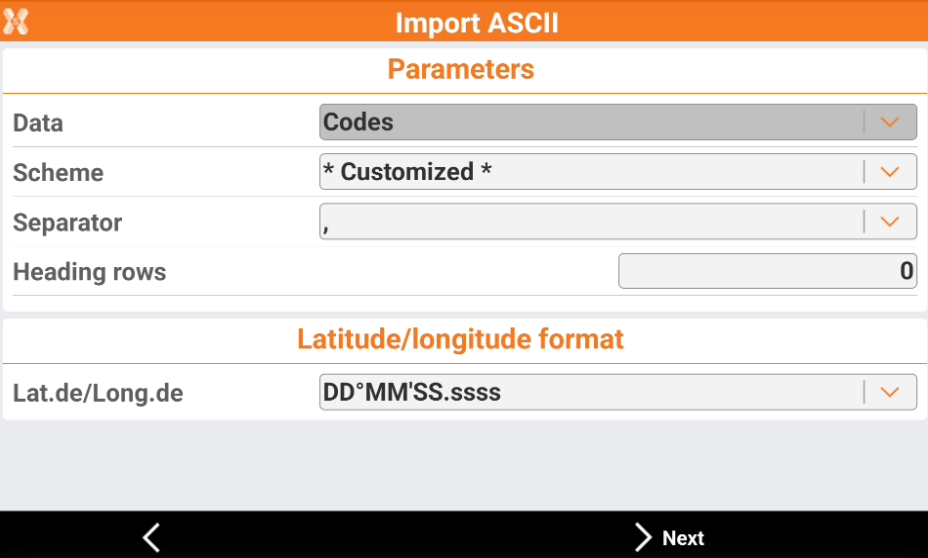
This selection opens a new window.
-
Scheme: the importation scheme, select Customized or select one of the saved schemes.
-
Separator: set the separation character.
-
Heading rows: set the number of lines composing the header of the file and that have hence not to be imported.
-
-
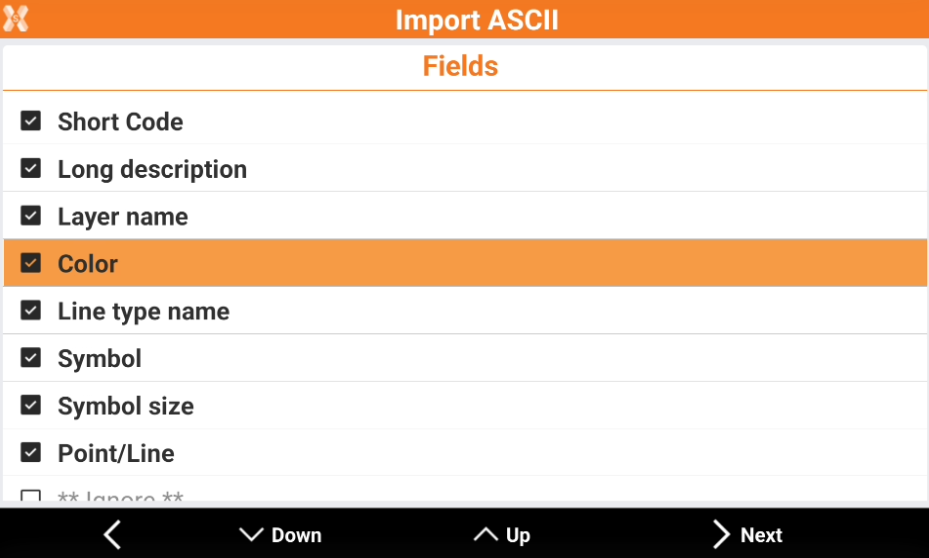
Decide which fields are present in the file and in which order. Select a field to enable/disable or click Down or Up to change the order. Click Next.
-
Short code: the name of the code.
-
Long description: the description of the code.
-
Layer name: the name of the layer.
-
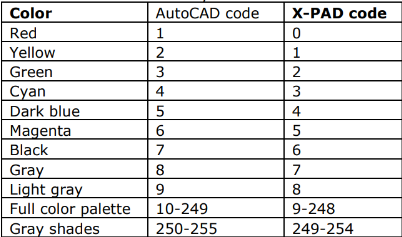
Color: the color of the layer. Has to be identifies as “AutoCAD color code” - 1.
-
Line type name: the name of the line type.
-
Symbol: corresponds to the number of the symbol in the symbol manager. “0” corresponds to a point.
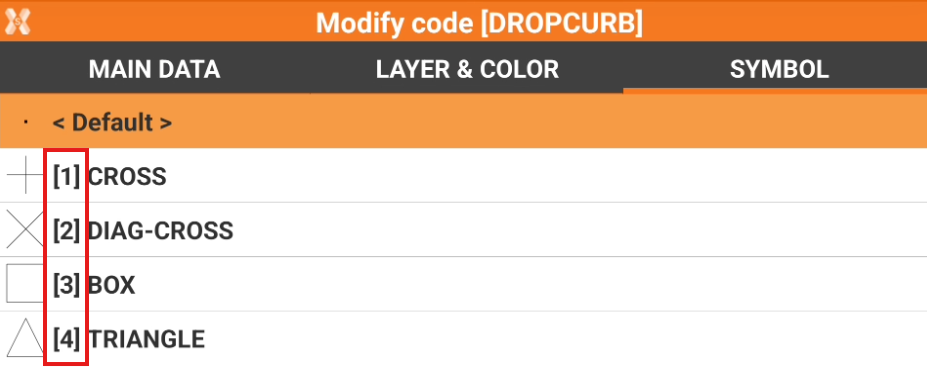
-
Symbol size: the size of the symbol. If nothing is entered by default the size will be 0.1 .
-
Point/line: the drawing type.
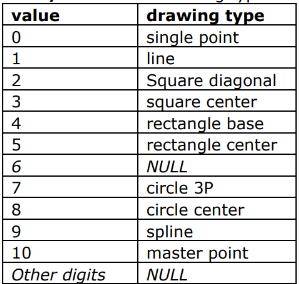
-
Ignore: allows to ignore this specific field.
-
-
Check the import preview and click Next.
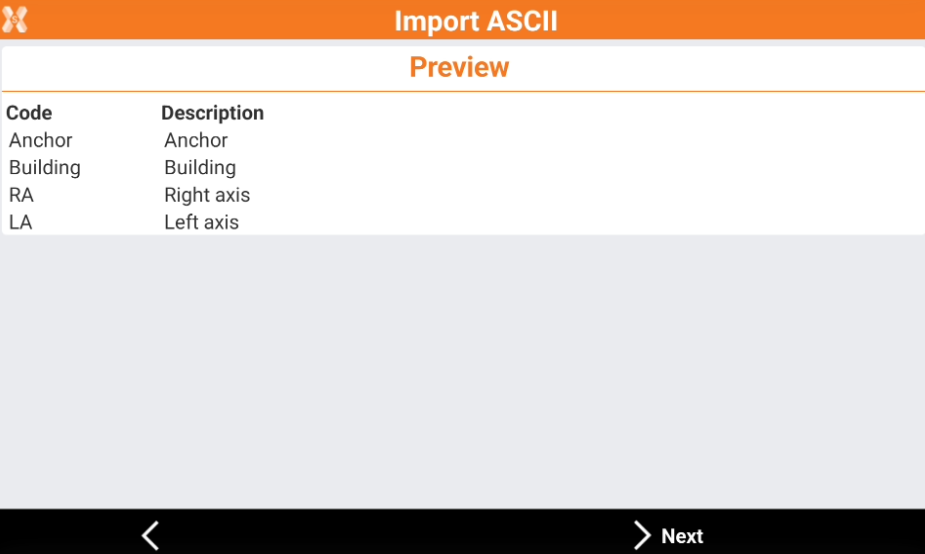
-
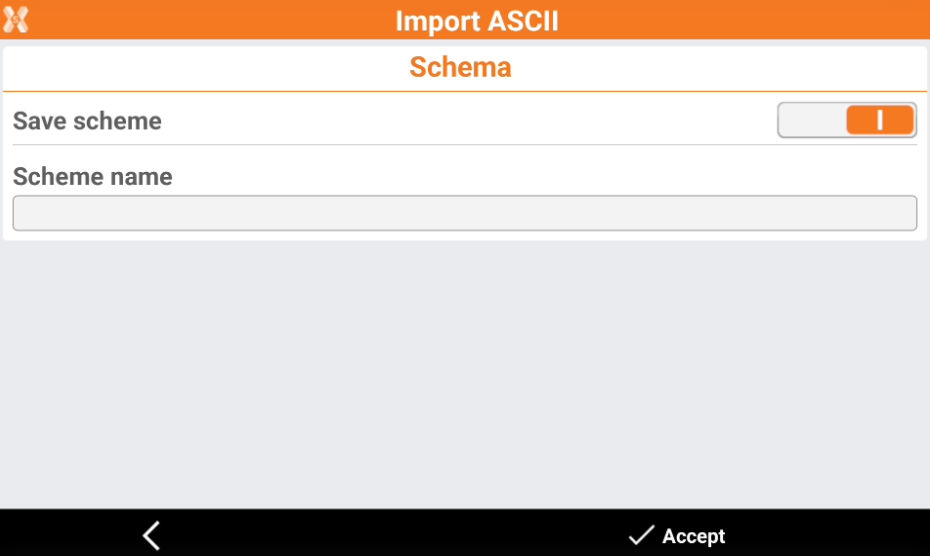
This page allows to save the importation scheme with a name to select it in future.
-
Save scheme: enables/disables the saving of the importation scheme.
-
Scheme name: the name to the scheme to save.
-
Schemes for import and export are saved as files in the directory X-PAD\_Data\Schemes. Files have *.psc extension.
-
Click Accept to import the codes library.
Import a code list from GeoMapper file
-
This option allows to import a code library in GeoMapper file format.
-
Select Load library from GeoMapper file.
-
Select the file to import the codes.
Import a code list from SCC file
This format is recommended when importing a code list including GIS features
-
This option allows to import a code library as SCC file.
-
Select Load library fromSCC file.
-
Select the file to import the codes.
Prepare a SCC file
-
The SCC file includes codes and GIS features and it is a solution to build a codelist with GIS features in an Excel file.
-
The SCC file contains different columns. A line can define a code or a GIS attribute depending if the first column value is FTR or PAT.
-
FTR: the line is a code. The lines contains instructions on how to create a new survey code.
-
PAT: the line is a GIS feature. The lines contains instructions on how to create a new GIS feature.
-
-
If the line is FTR (survey code), the column values are:
-
FTR.
-
Code ID.
-
Code decription.
-
Layer.
-
(empty)
-
(empty)
-
Smart drawing, according to this list.
-20250929-145131.png?cb=3fb8fb8a17fce68fab30ffbb093fa7a0)
-
(empty)
-
Line type.
-
Color for the code identified by the Hex code.
-
Number of associated to the code.
-
-
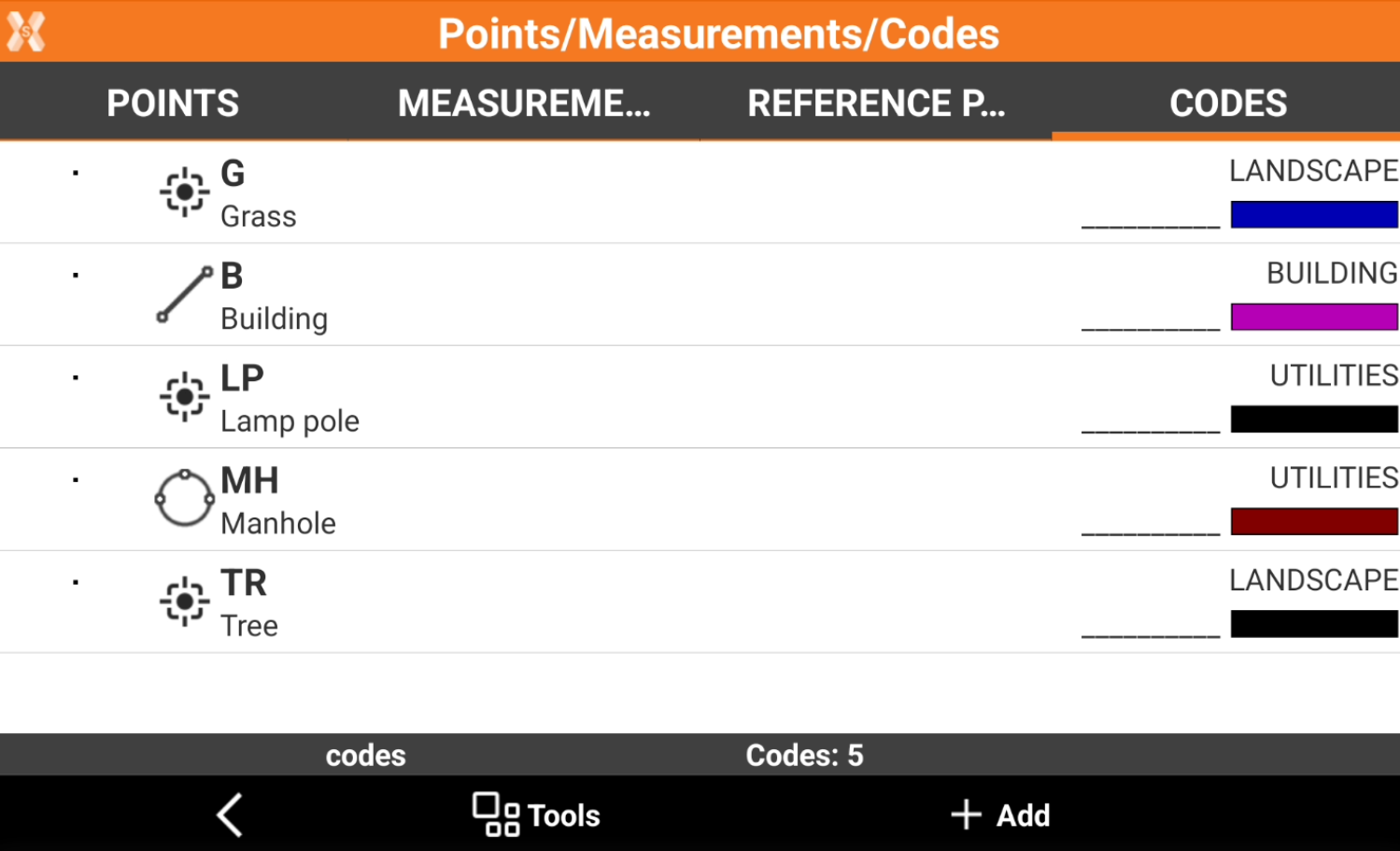
Below example shows the import of a list of 4 codes. These codes have no GIS attributes.

-
This is the result in the software.
-
If the line is PAT (GIS attribute), the column values are:
-
PAT.
-
Code to which the GIS attribute is assigned.
-
Attribute input type (list, real, text, integer, title, date, time).
-
Title of attribute.
-
Default entry.
-
Mandatory field (mandatory or empty).
-
Number of list options in case the type is list.
-
List value.
-
List value.
-
List value.
-
etc…
-
-
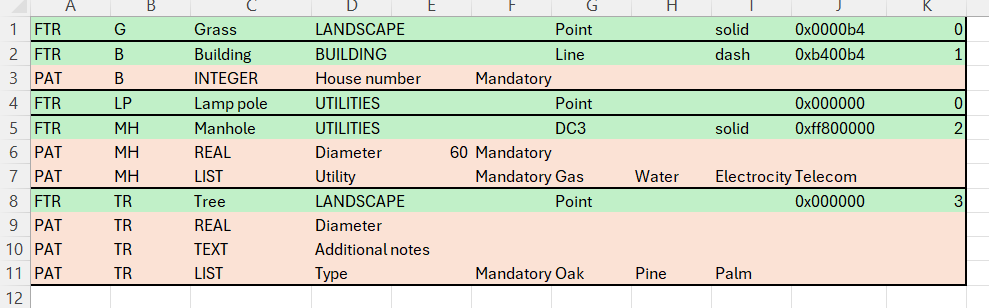
We want continue our example including GIS attributes to the defined codelist. In particular we want to add these attributes:
-
Building: the code includes a number attribute as house numbering (mandatory).
-
Manhole: the code includes a number as diameter (mandatory and 60 by default) and a list with the manhole utility (mandatory).
-
Tree: the code includes a number as diameter, a text as additional notes and a list with tree type (mandatory).
-
-
This example includes the previous codes with the additional GIS attributes. Download the example here: Codelist_2.csv
-
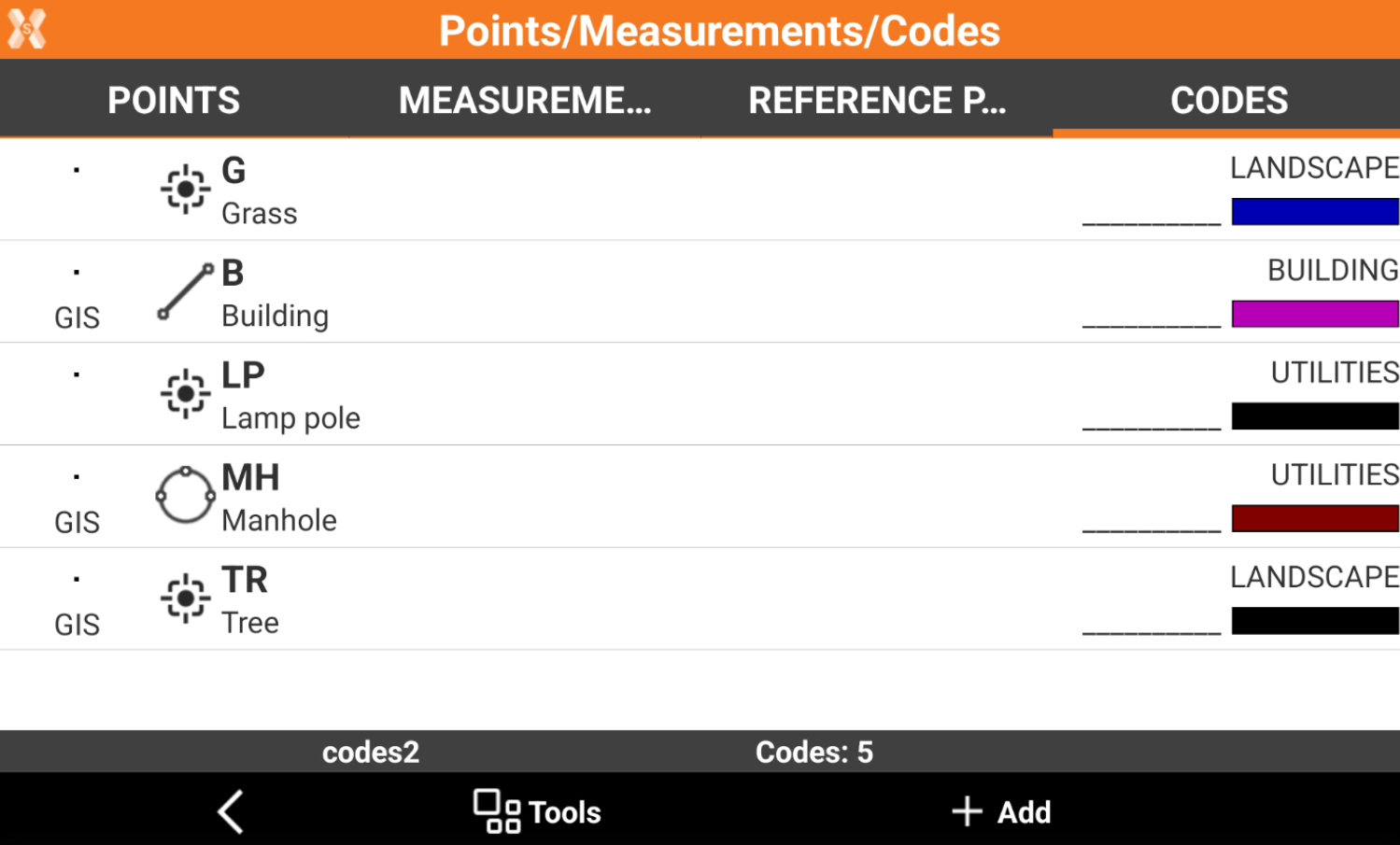
These are the codes in X- PAD after the codelist has been imported. The codes B, MH and TR have GIS attributes.
-
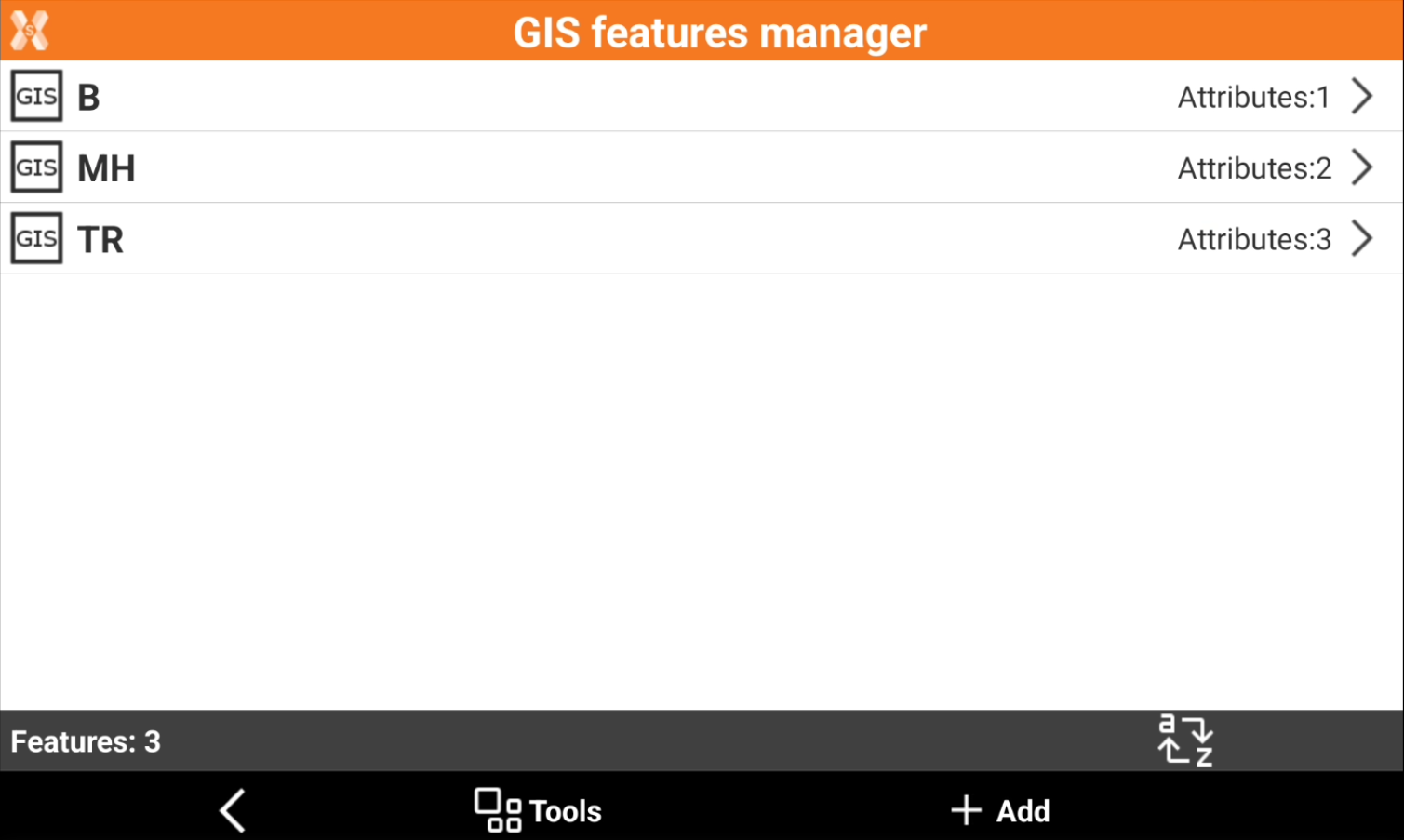
And the GIS features.
Import a code list from LandXML
-
This option allows to import a code library as LandXML file.
-
Select Load library from LandXML.
-
Select either to add codes to the current library or to create a new library.
-
Select the file to import the codes to the existing library or create a new library.